Tell us about your lawn
Share your location, lawn size, current condition and the services you’re considering.
22 years of experience. 550 projects completed. One practical goal: help you enjoy a lawn that is easier to care for.
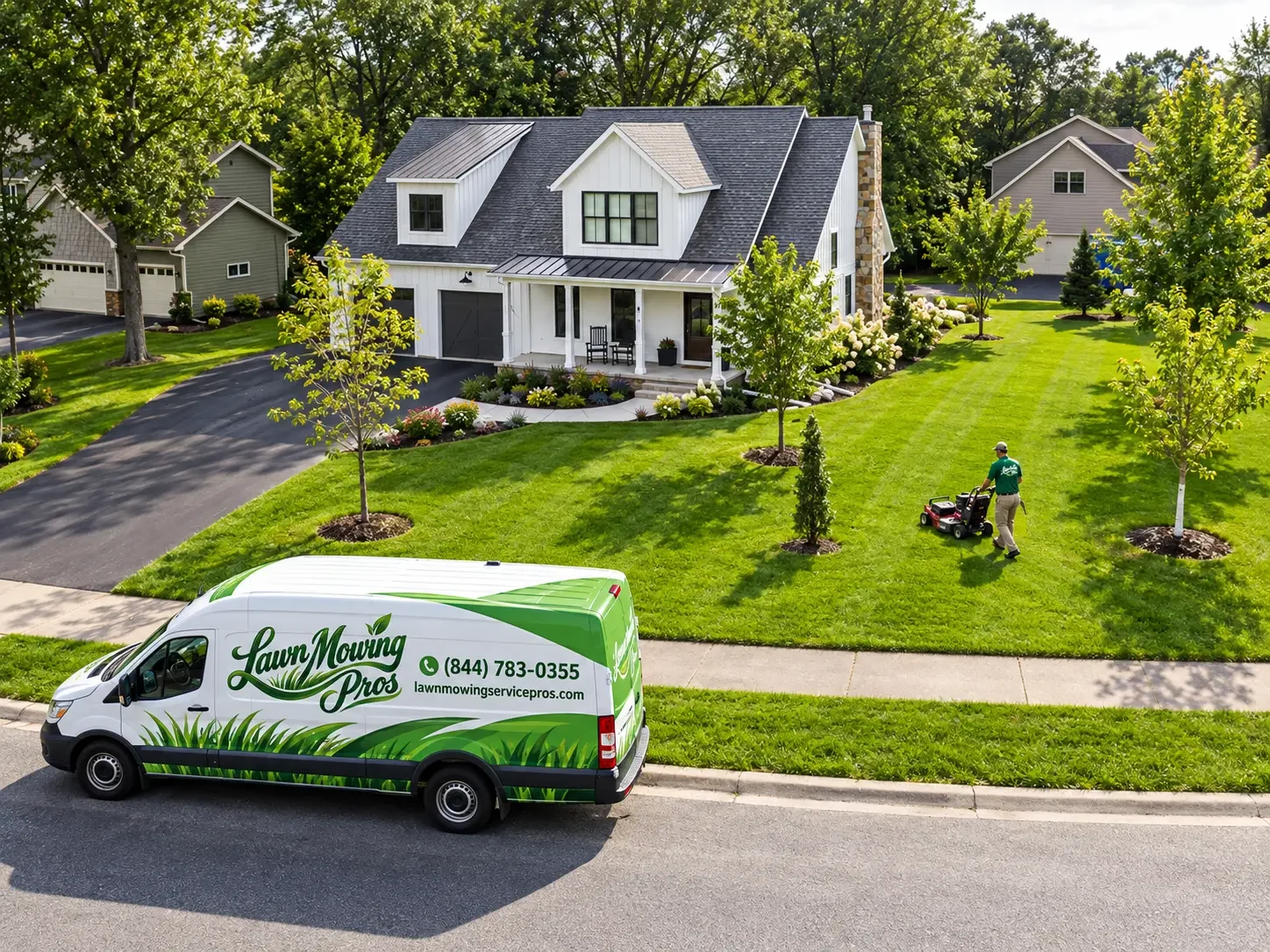 A little care. A greener everyday.
Lawn Mowing Pros brings 22 years of experience and 550 completed projects to lawn mowing, maintenance and yard care. Look for the green and white van: a trained crew, a mower and a plan built around your property.
Every lawn is different, so quotes start with a conversation about your address, lawn size, access and condition rather than a one-size-fits-all package.
You agree on what is included, how gates and access work and how the price is confirmed before a mower starts.
Trimming, edging and clearing hard surfaces are part of how a lawn should look when we leave, not an afterthought.
Reach the team directly at (844) 783-0355 for quotes, scheduling changes and questions about your service.
Lawn Mowing Pros focuses on lawn mowing, routine maintenance and related garden care. Our approach begins with the property, the current condition and the work you want to accomplish. The business brings 22 years of experience and 550 completed projects to those conversations.
From a one-time cut to a seasonal reset, we believe a useful plan should tell you what is included, how access will work and how the price is confirmed. Call with your address and priorities so the next step can be tailored to the actual yard.
A play lawn, landscaped front garden and managed commercial space have different needs. Explore the 20 service pages to understand the options, then discuss timing, availability and the finish you want. We do not assume every property requires every service.
Our coverage pages span the Houston and Dallas–Fort Worth areas of Texas, the Washington, D.C. region across Maryland and Virginia, Jacksonville, Florida, and Atlanta, Georgia. Availability is confirmed by address, so call with your street and ZIP code.
General guidance for each region. Your own grass type, soil and shade change the details, so confirm specifics by phone.
St. Augustine is among the most common lawn grasses around Houston, with Bermuda and Zoysia also widely planted. As a general rule, St. Augustine does best at roughly 3–4 inches, while Bermuda is kept much shorter, around 1–2 inches. If you are not sure what you have, describe the blade width and color when you call and we can talk through it.
Warm-season grass grows fastest from late spring through early fall, and the growing season in this part of Texas is long. Weekly mowing is a common summer rhythm, with slower growth and fewer visits in the cooler months. Heavy rain followed by heat can push growth faster, so frequency should follow the lawn rather than the calendar.
Saturated clay soil ruts easily and wet grass clumps and cuts unevenly, so a short delay often gives a better result. After a storm, fallen branches and debris should be cleared before mowing. Call to reschedule or to ask for a cleanup alongside the cut.
Bermuda is the most common choice across North Texas, with Zoysia, St. Augustine and Buffalograss also found in many yards. Bermuda is generally kept short, around 1–2 inches, while St. Augustine does better at 3–4 inches. The right height depends on your grass type and how the lawn is used.
Long hot, dry stretches can slow growth, and some warm-season lawns go dormant and turn tan in drought or winter. Cutting too short in extreme heat adds stress, so mowing height and frequency are worth discussing before the hottest weeks. Watering rules differ between cities and utilities, so check what applies to your address.
After a storm, branches, leaves and hail-damaged plant material should be cleared so they are not shredded or thrown by the mower. Tell us about the debris when you call, and ask whether a cleanup can be done with the first visit or should be scheduled separately.
Cool-season grasses such as tall fescue and Kentucky bluegrass are common across the region, and Zoysia appears in some warmer, sunnier yards. Tall fescue generally does best at about 3–4 inches. Keeping it on the taller side helps the lawn cope with summer heat and crowd out weeds.
Mowing typically begins in spring and continues into late fall. Cool-season grass grows fastest in spring and again in fall, and often slows in the summer heat. Fall is also the usual conversation for overseeding and aeration, so ask about timing if your lawn is thin.
Leaves left in a thick wet layer can smother turf, so regular clearing through the fall helps. Leaf removal can be a separate visit from mowing, so describe the size of the yard and the number of trees when you call. Check any local collection rules for your address before deciding where the material should go.
St. Augustine is very common in Northeast Florida, with Bahia, Centipede and Zoysia also used. St. Augustine generally does best at about 3–4 inches, while Centipede is kept lower, roughly 1.5–2 inches. The soil here is often sandy, so water and feeding habits matter as much as mowing.
Daily afternoon storms and fast summer growth can make a regular schedule harder to keep. Mowing wet grass gives an uneven cut, so visit times may shift around the weather. Describe how the yard drains when you call so the plan can allow for it.
Many Florida communities restrict fertilizer use during the summer rainy season to protect waterways, and the details vary by city and county. Check the rules for your address before applying any product. If you are unsure what your lawn needs, ask first rather than adding products without a plan.
Atlanta sits in the transition zone, so lawns include tall fescue, Bermuda, Zoysia and some Centipede. Tall fescue generally does best at about 3–4 inches, while Bermuda is kept much lower, around 1–2 inches. Describe your grass when you call so the cutting height fits it.
Hot, humid summers push warm-season grass into fast growth while cool-season fescue can struggle and thin out. Cutting fescue too short in heat adds stress. Frequent summer storms can also delay visits, so plan for some schedule flexibility.
Tall fescue lawns are usually overseeded and aerated in early fall, while warm-season grasses like Bermuda and Zoysia are generally worked on in late spring. The right timing depends on your grass type, so confirm it before booking.
Share your location, lawn size, current condition and the services you’re considering.
Discuss access, the scope, scheduling and the price before work begins.
Complete the agreed mowing or lawn care tasks, with attention to plants and hard surfaces.
Review the result, aftercare and whether a regular schedule makes sense for your yard.
Explore 20 lawn and landscape services. Choose what your yard needs, or call us and we’ll help you work out where to start.
A consistent cut, a calmer weekend.
A lawn care rhythm that fits your home.
Clean lines make the whole yard feel finished.
Care for the places a mower cannot reach.
Bring a neglected yard back into reach.
Start with the weed, then choose the response.
Feed the lawn according to its needs.
Give compacted ground room to breathe.
Help thin turf grow into a fuller lawn.
A fresh lawn begins below the surface.
Keep autumn leaves from becoming a heavy blanket.
Reset the yard for the season ahead.
Bring structure back to your green borders.
Thoughtful cuts for healthier structure.
Make your planting beds easier to enjoy.
A finishing layer with a practical purpose.
Address buildup when the lawn actually needs it.
Build a plan for a struggling lawn.
Keep shared outdoor spaces presentable.
Practical care for the place you call home.